Soundproofing Solutions for Homes: Quiet Floors for Peaceful Living
Do you ever tiptoe across your floors at midnight, hoping not to wake anyone? Or maybe you’re tired of every creak and stomp echoing through your home. If your house sounds more like a drumline than a peaceful retreat, you’re not alone.
At DND Flooring, we know noise isn’t just annoying—it’s exhausting. Whether it's footsteps overhead, a dropped toy, or the constant hum of daily life, floor noise can chip away at your comfort. But with thoughtful planning and the right materials, quieter floors are within reach.
Why Floors Get Noisy (And Why It Matters)
Floors are like the strings of a guitar. Step wrong, and the whole room vibrates. Here’s why:
- Material matters: Hard surfaces (think tile or hardwood) reflect sound. Soft ones (like carpet) absorb it.
- Structure counts: Gaps, loose boards, or thin subfloors amplify every step.
- Room function: Bedrooms need hush. Kitchens often echo.
Continued noise isn’t just a nuisance. Studies published by the National Institutes of Health connect chronic noise with stress and poor sleep. For families, that means cranky mornings and lost focus. For multi-family homes, unaddressed noise can even become a neighborly dispute.
Safety First: Quick Soundproofing Checklist 🛡️
Before you chase silence, check these boxes:
- Is your subfloor stable and secure? Loose boards need repair first.
- Any visible water damage or mold under old flooring?
- Confirm electrical and plumbing are safe before removing floors.
- If you’re in a condo or multi-family home, review local building codes and HOA rules (see International Building Code for guidance).
- Have the right PPE: gloves, dust mask, knee pads.
Material Choices for Quieter Floors
Not all floors hush the same way. Here’s how popular options stack up:
Carpet and Padding
- Plush, dense carpet is a classic sound soaker.
- High-quality underpadding (like memory foam) boosts sound absorption.
- Best in bedrooms and nurseries.
Cork Flooring
- Cork is nature’s sound sponge.
- Its tiny air pockets trap noise before it can bounce.
- Eco-friendly and soft underfoot—perfect for upstairs rooms.
Luxury Vinyl Plank (LVP) & Tile (LVT)
- Thicker LVP/LVT with built-in underlayment tames tap-tap-tap.
- Look for products rated with high IIC (Impact Insulation Class) and STC (Sound Transmission Class) scores.
Laminate Flooring
- Needs a quality underlayment for sound control.
- Foam or rubber underlays cut down airborne and impact noise.
Area Rugs and Runners
- Quickest fix for echoing hard floors.
- Add rug pads for even more hush.
Underlayment: The Unsung Hero
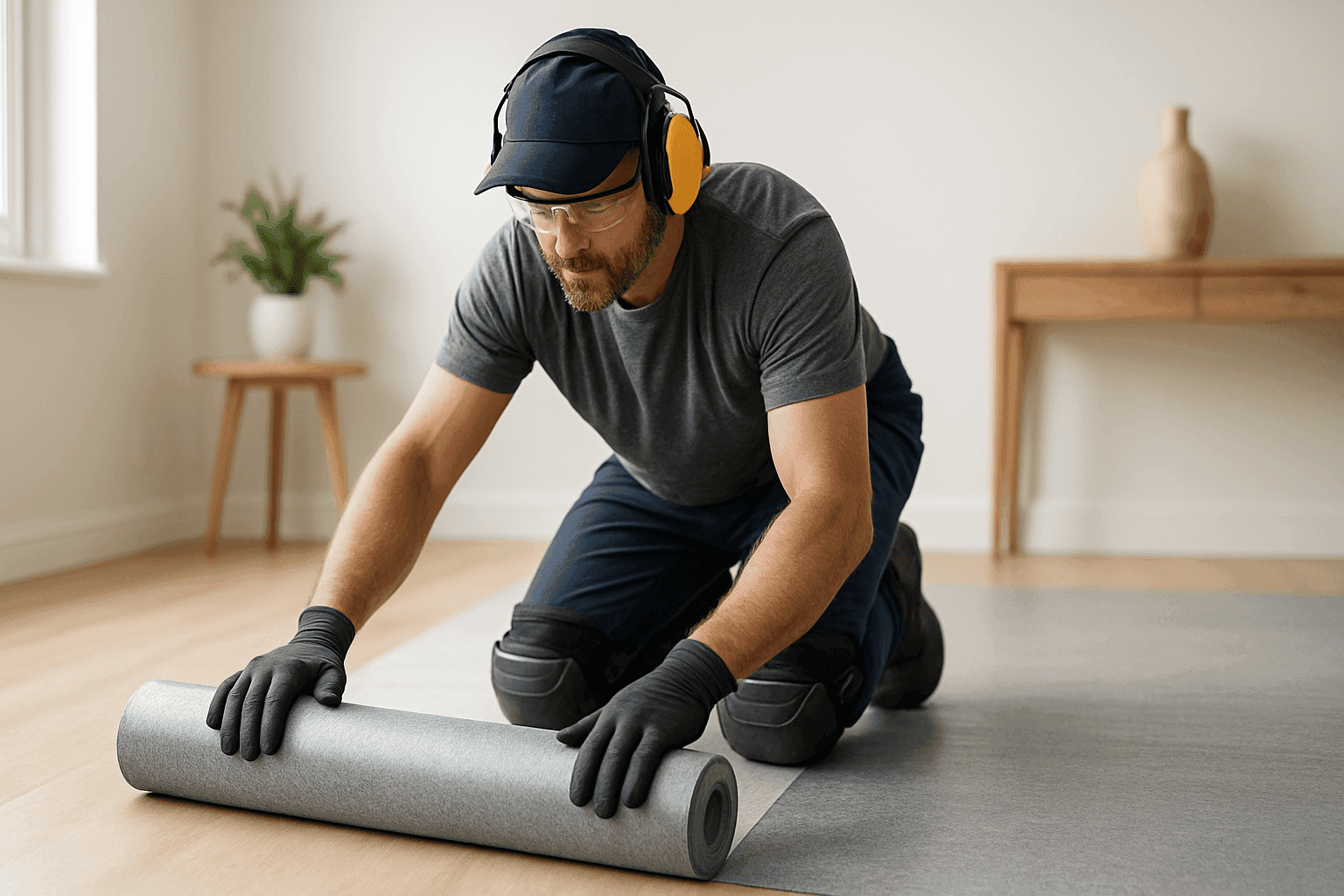
Underlayment is the secret sandwich between your subfloor and finished surface. It soaks up sound, cushions footsteps, and sometimes blocks moisture.
Popular options:
- Foam: Affordable, easy to install, decent sound absorption.
- Rubber: Superior at blocking noise, lasts longer.
- Cork: Double-duty for eco-friendliness and noise reduction.
- Felt: Dense and heavy, great for upstairs rooms.
Installation Tricks for Maximum Quiet
Great materials need smart installation. Here’s what makes the difference:
- Float floors on an underlayment instead of gluing or stapling.
- Seal gaps along walls with acoustic caulk.
- Stagger planks for fewer squeaks.
- For tile, use sound-deadening mats under the mortar.
Poor installation can undo even the best material. That’s where experience counts.
Bedrooms: Creating a Sleep Sanctuary
Bedrooms crave calm. For the best night’s sleep:
- Choose plush carpet or cork.
- Use thick underlayment beneath any hard surface.
- Install baseboard insulation to stop wall-to-wall echo.
A quiet floor here means better rest for everyone.
Upstairs Rooms: Blocking the Boom
Upstairs rooms echo like old basketball courts. To tame the noise:
- Prioritize dense underlayment—rubber or felt does wonders.
- Floating floors (not nailed) absorb more impact.
- Add area rugs in high-traffic spots.
For playrooms or home offices, layering helps. Consider cork plus a large rug for double the quiet.
Multi-Family Homes: Neighbor-Friendly Floors
In condos or townhouses, floor noise is a neighborly issue. Many buildings require flooring to meet certain IIC and STC ratings (check your HOA or local building code).
- Opt for LVP/LVT or laminate with premium soundproof underlayment.
- Acoustic mats beneath tile or hardwood can be a game-changer.
- For carpet, use thick pads rated for multi-family dwellings.
Good soundproofing keeps the peace—and may be required for compliance.
Understanding Sound Ratings: IIC and STC
Not all quiet is created equal. Look for these scores on flooring and underlayment:
- IIC (Impact Insulation Class): Rates how well a floor stops footsteps and drops.
- STC (Sound Transmission Class): Measures how much airborne noise (like talking or TV) gets through.
The higher the number, the quieter your space.
Tip: For bedrooms and upstairs, aim for IIC and STC scores above 60.
Common Pitfalls to Avoid
- Skimping on underlayment to save a few bucks.
- Ignoring subfloor repairs—creaks will return.
- Using cheap foam underlayments that collapse over time.
- Forgetting code requirements in multi-family buildings.
- DIY-ing without proper prep, leading to costly redos.
Combining Strategies: Layer for Success
No single fix solves all noise. The quietest floors use layers:
- Stable, solid subfloor.
- Quality underlayment.
- Sound-absorbing surface (carpet, cork, LVP).
- Area rugs where extra hush is needed.
- Acoustic sealant at the perimeter.
The result? Floors that feel like walking on clouds.
DIY or Call in DND Flooring?
Some projects are DIY-friendly—others aren’t.
When DIY Works
- Laying area rugs and pads.
- Floating laminate or LVP with click-lock systems.
- Installing peel-and-stick underlayment.
When to Call a Pro
- Subfloor repairs or moisture issues.
- Multi-family soundproofing (compliance counts).
- Tile, cork, or hardwood installations.
- Floor leveling or radiant floor heating.
If you’re unsure, a Flooring Consultation near you can save headaches (and backaches).
What Happens When the Pros Arrive
Here’s how DND Flooring gets it right:
- Inspect the subfloor for squeaks or moisture.
- Confirm code/HOA requirements for sound ratings.
- Recommend the right materials for your space and budget.
- Handle tricky installs—curved stairs, tight corners, radiant heat.
- Leave your home tidy and ready for quiet.
No guesswork. Just experienced hands and proven methods.
Prevention & Maintenance
Quiet floors stay quiet with a little care:
- Tighten loose boards right away.
- Replace worn underlayment if flooring starts to creak.
- Keep area rugs and pads clean and in good shape.
- For hard floors, add felt pads to furniture legs.
Regular floor inspections catch problems before they get loud.
Costs & Time Factors
Soundproofing costs vary, but here’s what to expect:
- Materials: Sound-dampening underlayment runs $0.50–$2 per sq ft. Carpet or cork ranges from $3–$8 per sq ft.
- Labor: Professional installation adds $2–$7 per sq ft depending on complexity.
- Time: Simple rooms take a day. Larger or multi-story homes need more time, especially if repairs are needed first.
Investing in soundproofing pays off for years with quieter, more enjoyable living.
When It’s an Emergency
Sudden squeaks after a flood? Water-damaged subfloors? These can quickly spiral into bigger problems. If you notice:
- Soft, spongy spots.
- Persistent creaks in new floors.
- Signs of mold or moisture.
Pause. Don’t keep walking on it. Get a pro to inspect right away. Fast action prevents structural damage and keeps your family safe.
FAQ: Soundproof Flooring
How effective is underlayment alone?
Underlayment makes a big difference, but layering with soft flooring gives the quietest result.
Can I soundproof old hardwood without replacing it?
Yes—add dense rugs and pads, and seal gaps with acoustic caulk.
What’s the quietest floor for a nursery?
Plush carpet with thick padding, or cork flooring, is ideal for little feet.
Do building codes require soundproof floors?
Many condos and townhouses do—check your local code or HOA rules.
Local and Seasonal Considerations 🌦️
Humidity swings can make floors expand, contract, and creak. In basements or damp climates, use moisture-resistant underlayment.
If you live in a multi-story home, focus on upstairs bedrooms and hallways first—these make the biggest impact.
The Path to Peaceful Living Starts Underfoot
A quieter home is possible—and it starts with the right floor. Whether you’re planning a full remodel or just want to hush a bedroom, DND Flooring is ready to help you find the best soundproofing solution. Let’s create a space where every step feels calm.
Call DND Flooring now — or reach us anytime at 877-879-0701 .